


С самоваром чай вкуснее, а беседа веселее
Tea tastes better and conversation is more cheerful with a samovar
Так повелось (that’s how it became customary) – по традиции / by tradition.
Званый (invited / the invited one) – тот, которого позвали, пригласили / one who has been called, invited.
Застолье (feast) – угощение за общим столом / a meal; a treat shared at a common table.
Частушки (chastushkas / ditties / humorous rhymes) – (от наречия часто - быстро) короткие и быстрые народные песенки / short and fast-paced folk songs (from the adverb "often" ("часто")).
Быличка (bylichka / tale) – рассказ о будто бы происшедшем необыкновенном событии / a story about an extraordinary event that supposedly happened.
Так уж повелось на Руси, что гостя (званого или незваного) надо было сначала посадить за стол, накормить, напоить, а потом уж расспрашивать. Застолье и задушевная беседа в России неразрывно связаны между собой и сейчас. А какое же застолье без чаепития? Самовар - самый известный атрибут русского чайного стола. Первые самовары начали производить в Туле, где и знаменитые тульские пряники делают.
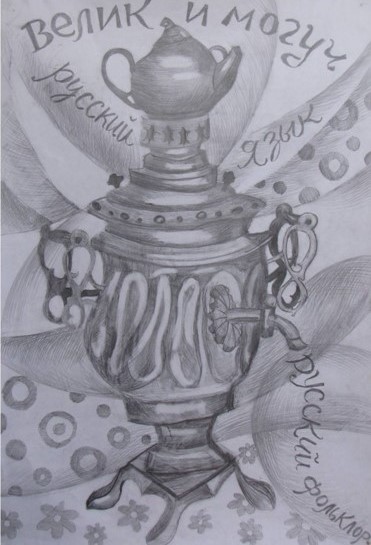
Автор этого рисунка очень тонко подметил несколько деталей: в беседах за самоваром русский язык мог быть "велик и могуч" (гости могли решать философские вопросы, рассуждать о жизни), а мог быть игривым, полным загадок и намёков, как русский фольклор: и частушки за столом можно было петь, и загадки загадывать, и былички рассказывать. А самовар в центре стола при этом свою роль играл: долго не остывал, гостей угощал, кипел, пыхтел, гудел, словно песни пел.
____________
That’s how it became customary in Ancient Russia: a guest (invited or uninvited) had to be first seated at a table, fed, given something to drink, and then questioned. Feasting and intimate conversation in Russia are inextricably linked even now. But what kind of feast is there without tea? The samovar is the most famous attribute of the Russian tea table. The first samovars began to be produced in Tula, where the famous Tula gingerbread is also made.
The author of this illustration very subtly captured several details: in conversations around the samovar, the Russian language could be "great and powerful" (guests could discuss philosophical questions, talk about life), or it could be playful, full of riddles and hints, like Russian folklore: chastushkas could be sung at the table, riddles told, and bylichkas shared. And the samovar in the centre of the table played its own role: it did not cool down for a long time, served the guests, boiled, puffed and hummed, as if singing songs.